Jackson is answering a question almost every cat owner faces — why is my cat attacking my ankles and how do i make it stop!? He just won't stop and he's too dar.

Kittens Attacking Feet YouTube
We taught kitten mithy not to play with our feet under the covers no matter how tempting they were.
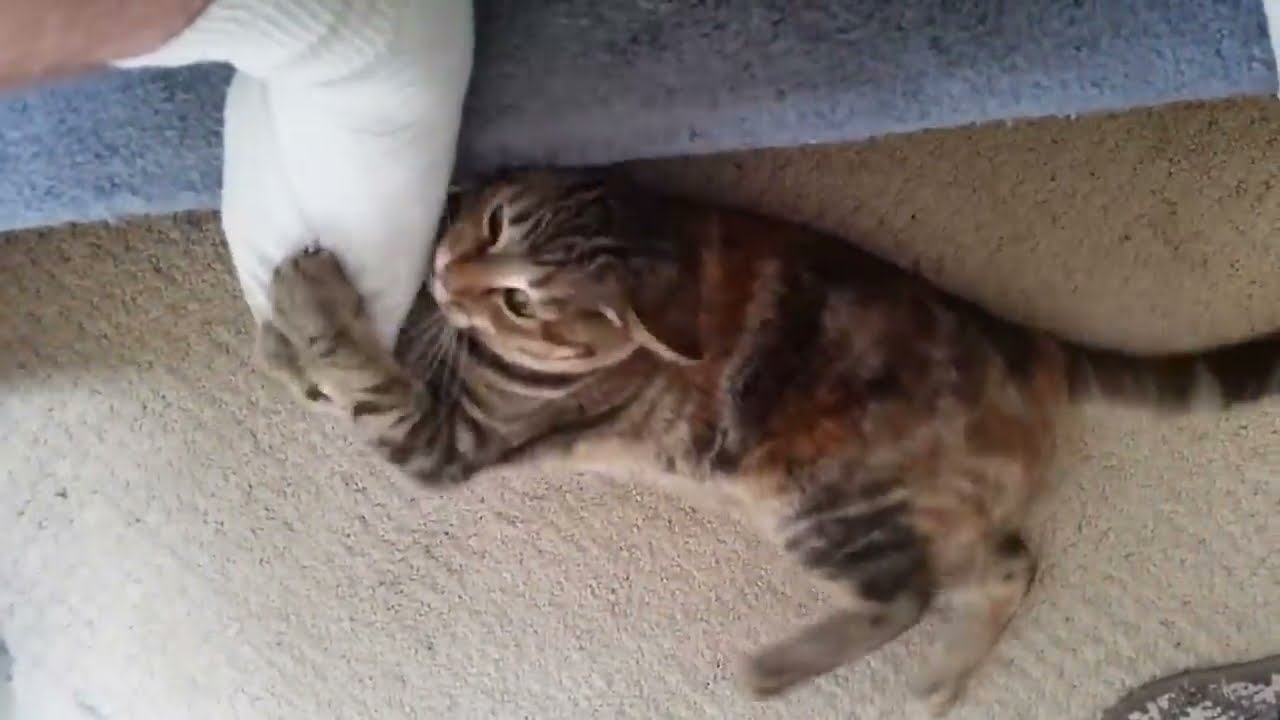
Kitten wants to attack feet. My kitten used to do this, especially around this age and she wasn't being mean but it was very painful and none the less a bad habit. Well, the solution is pretty sim. As hunters, cats’ hunting behavior evolved to be prompted by different stimuli.
Kittens become socialised within their litter and learn to inhibit over. If your cat attacks your feet when you are sat down, one option would be to get your cat to sit somewhere else. A cat often bites because the human doesn't understand what he or she is trying to say.
This is all normal behavior for a kitten. What to do about your cat attacking your feet. In any case, this would be the worst moment to give the treat as the biting behavior will only increase.
For some cats, that drive is so strong that your moving feet will trigger it. when your kitty sees your feet moving around under the bed covers, their instincts are on high alert: Sound, such as the ultrasonic mouse squeaks can stimulate attack. One pet owner mentioned this was why her cat bit her feet in a quora answer to the op question “why is my cat biting my feet all the time?”
Be alert to your cat's behavior cues. The only way i've gotten it to stop is getting up and playing with him until he's tired. Why do cats attack feet so often?
Maybe she’s looking for food or a treat, or she wants to get into a room that has its door closed. Your cat wants something else & is using a bite to get your attention. This is generally regarded as 'mock' aggression.
Also, make sure your cat has enough environmental stimulation so it's less likely to focus on you, like toys, cardboard boxes, and scratching posts. He's likely waiting until your feet move a tiny bit under the blanket, then hunts it like prey. Otherwise, he may drive home the point with his teeth and claws.
Why do cats like feet in. The problem with that is if the cat enjoys the deterrent it becomes learned behavior that’s how to achieve the deterrent. For some cats, the drive is so strong that even moving feet trigger them to attack.
As cat health noted, cats chase things because it's innate behavior. If you’ve noticed that your cat appears to attack your feet when you’re busy or not paying attention to her, it might be that she is looking to get your attention. This puts much more punch in our expressions of delight or distress.
When your kitty is signaling you that he's had enough petting, for now, it's best to listen to him. Since they are predators, it automatically flourishes in them, and eventually, they attack. My cat attacks our feet because he wants to play, it's never because of food.
Watch this ferocious little cat attack and bite my foot! Below are some options you have when dealing with the behavior. Although this is natural, it is worth an owner correcting a furry pet’s behavior to protect their own limbs from scratches.
Yes, it is quite normal for cats and other animals to go after feet. One of the ways we saved our toes was by letting mithy know when he hurt us. They're predators, so it's second nature for them to chase things.
Because a kitten’s claws are soft and short enough to cause minimal damage, owners encourage them to attack feet out of amusement. Attacking human feet, kittens, and adult cats realize their hunting instinct. Either way, the cat is driven to use its claws and possibly its teeth to complete the attack.
A young kitten will pounce, chase, stalk, wrestle, bite and scratch its siblings and mother. Intimidation is another common reason your cat often bites or scratches your feet. This all comes down to socialization, which helps explain why kittens are especially pernicious when it comes to pouncing on feet.
Cats like human feet are the ideal shape and size for them to catch. If you have noticed that your cat appears to be attacking your feet from past days, you are busy and not paying enough attention to him. I had tried to redirect her behavior but it never got me anywhere, i ended up resorting to a squirt bottle for feet attacks and blowing on her for closer range attacks.
Once we form a bond with our cat, we will care very much if the other being is happy and comfortable. Your cat may bite your feet because they want your attention because they need something like food or water. But as kittens grow and develop hard, sharp claws, these antics become a problem, and your cat can’t recognize that it’s being naughty.
The kitten is not intending to hurt anyone, it is just intent on having a good time. They may also want to get your attention if they are in any physical distress. Sometimes your cat is just bored and wants to spend time with you (preferably playing), and giving them a place to play and still stay close to you might be all that you need to do to protect your sensitive feet.
I see a number of answers suggesting a deterrent. Get your cat to sit somewhere else. Never punish a cat for this natural behavior.
Sneak attacks on feet come when cats aren’t quite clear about where their toys end and humans begin. If your cat has a lack of other opportunities for play, they'll likely seek out other outlets for their energy, including attacking your feet. Is it normal for a cat to attack feet?
My sister got a new kitten, max, and he is the attacker of feet! From their early period when they were kittens, they have seen that your feet are moving under bed covers, which gives them instincts on high alert. One way to do so would be to put a cat bed somewhere for it to lay down in.
Lastly, you cat may bite your feet if there is something that is scaring or intimidating them, like another animal. If your cat has been attacking. Your cat is looking for attention from you and wants to.
Some cats use biting as a method of grabbing your attention to demand something completely unrelated to play or affection. Usually, a cat sees something moving in a way that provokes the instinct to attack, meaning that the cat considers the object (a hand, a foot, a small child) to be a threat or prey. If i pounce on those feet i get that toy.
Cats will get pleasure from shrimp legs, shrimp tails, or shrimp heads a lot because of the meat from the shrimp’s torso. Such high levels of sodium are unhealthy for your kitty, to say the least.

So, to answer your question can cats eat shrimps? The
The real benefit to feeding your cat a piece of shrimp once and a while is that it fosters bonding between you and your beloved feline companion.

Can i feed my kitten shrimp. I've fed shrimp to my cats before but never when they were that young. For your cat to develop its feeding preferences, it is critical to introduce him to various textures and flavors from an early age. Here’s what you should know about feeding shrimp to cats.
Neither human beings nor cats will eat shrimp’s digestive tract if they get to eat it with any seasoning. Yes, cats can eat cooked shrimp. Can i feed kitten raw shrimp?
Here is a rundown of some of the health problems your cat might face: Plain, boiled, baked, or steamed shrimp is the healthiest choice to feed your cat. All shrimp should be cleaned—the digestive tract removed—but it is safe for cats to eat the head.
Shrimp is safe for cats. If you decide to let your cats eat shrimp, it is best to limit it to once or twice a week. Shrimps are delicious and you will love being able to share them with your pet.it will definitely love the shrimp as much as you like them.
The answer is that shrimp is ok to give your cat, but not every day, and not as a substitute for their regular cat food. Shrimp, on the other hand, have a diverse range of flavors and textures. Each option will probably be tasty, and each choice will odor attractive to a.
Though shrimp is a tasty snack for your cat, it isn’t recommended to feed shrimp to your cat as a meal replacement. You can feed your kitten raw or cooked shrimp as long as the shrimp have not been excessively processed or preserved. Cats can safely eat shrimp, and it feels good to share with them!
If your cat is having shrimp for the first feed, then keep an eye on them for any adverse reactions. Shrimp is good as an occasional treat for cats. Yes, plain cooked shrimp are okay to eat for your cat in moderation.
In fact, many cats would love to have raw shrimp. This is especially true if you give this in large amounts. Shrimp can be used in any recipe as a raw ingredient or for some purposes as a snack.
Most of the cats can eat shrimp without any problems. That’s why shrimp should never be a meal replacement for your cat. Shrimp should only be given to cats in moderation.
That being said, it’s important not to give your cat shrimp too often as they may become picky and refuse their cat food. Dried shrimp should not replace a domestic cat’s primary food source, and dried shrimp with salt, herbs or other seasonings should not be fed to cats. Cats love eating fresh shrimp, and it is generally safe.
As always, you must ask your vet before sharing any human foods with your cat, including shrimp. The short answer is yes, cats can safely eat shrimp. Yes, it’s all right for cats to eat shrimp, but the safety of your kitty should always be on top of your list.
Besides, shrimp contains a few substances that aren’t healthy in large amounts, which we’ll talk about later. Kittens can eat a small amount of shrimp so long as a food allergy is not present. A cat is a natural carnivore, so giving them shrimp is right up their alley.
Follow our feeding guidelines to prevent health problems, as shrimps are high in sodium and cholesterol. In fact, shrimp is often used in commercial cat foods and can be a good source of protein for your cat. These foods are extremely high in sodium, which serves as a preservative.
You might be thinking that cats love all things seafood, like shrimp, since it’s a popular notion that cats like fish. Shrimp is extremely low on mercury, and most cats seem to love their taste and smell as well. Too much shrimp can be bad for your cat because it does contain cholesterol and sodium.
Not only can cats safely eat shrimp, many respond well to both its scent and flavor. Shrimp is high in sodium and cholesterol, so it’s important to practice moderation when sharing shrimp with your cat. Avoid seasoning, salt, and butter as they are unhealthy or even toxic to your cat.
Can cats eat raw shrimp? However, you also have to take into account risks involved, or as vets love to put it, “the dangers of feeding your cat shrimp.”. How much shrimp can cats eat safely.
Shrimp, and all seafood, also comes with the risk of contamination and parasites. Shrimp is just an occasional, delicious treat because it's high in. To protect your cat from parasites, only feed them fresh shrimp that has been cooked at a temperature high enough to kill any parasites that may be present.
The answer is yes if you give it one or two. And if the downside outweighs the upside, you’re better off feeding your cat something else. The short answer is yes, cats can safely eat shrimps.
In this article, we’ll examine the question of whether cats can eat shrimp and whether it is safe for them to do so. Make sure if you do feed it to them, make sure you only give them a tiny bit, and break it up into tiny pieces for them. This is because they are rich in sodium and cholesterol and could risk your cat’s health if given excessively.
You may feed your kitty with these components of the shrimp of their raw or cooked kind. Sadly, feeding shrimp to your cat involves risks. However, the safety of shrimp largely depends on how it has been prepared.
Everything has an upside and a downside. However, this is a question that many cat owners have on their minds. Please do not add any seasoning to it.